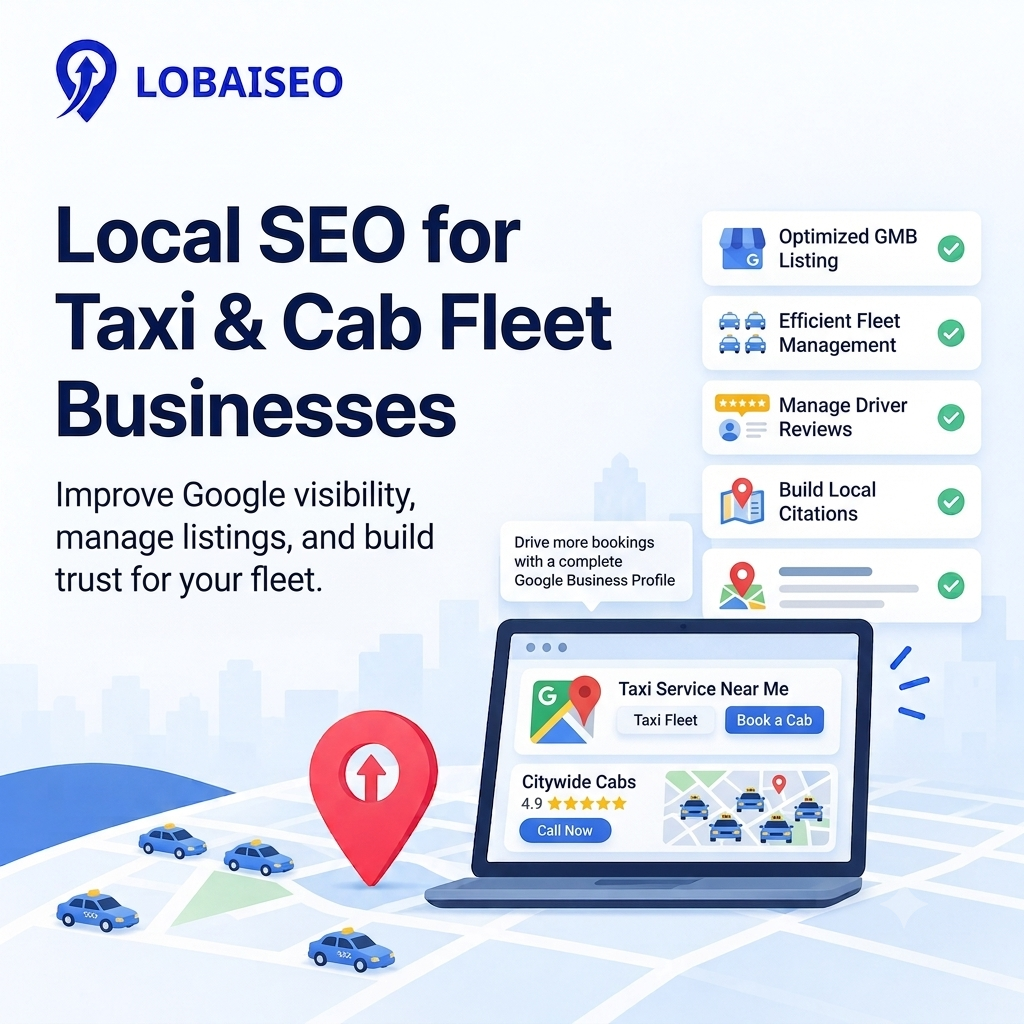
Poor editing, redundant listings, inconsistent phone numbers, and out-of-date branch data quickly degrade visibility throughout a broad taxi network. Local SEO for taxi and cab fleet companies begins with correct Google Business Profiles, clear geographic data, and a way to keep each branch uniform.
How Local Search Works for On-Demand Transport Businesses
A taxi company can serve an entire city, but Google still evaluates local relevance around the searcher and each eligible business location. Local results mainly consider relevance, distance, and prominence.
For example, someone searching “airport taxi near me” may see different results from someone searching “airport taxi in Chandigarh.” A strong taxi fleet local SEO workflow therefore combines accurate GBP information with location-specific website pages, genuine reviews, and clear service details.
Start by mapping every operating location, service area, phone number, landing page, and profile owner. Then compare this master data against Google Maps. Fix mismatches first. This same location-by-location control is what we at Lobaiseo focus on when managing bulk GBP operations across large networks.
GBP Setup for Cab Fleet and Travel Agency Businesses
The biggest setup mistake is treating every city or service as a separate listing without checking whether Google considers it an eligible location. A cab business Google listing should represent a real business location or an eligible service-area setup, not a virtual address created simply to target another city.
If they match Google’s criteria, a fleet with manned offices in Delhi, Jaipur and Chandigarh can have each of their real locations as a profile. Check the business name, location, phone, hours, category, website and service information for each branch for accuracy.
Create a single master sheet before releasing profiles. Each location must have a unique internal code, an owner, a verification status and be associated with the right local landing page. Google also provides for bulk location management using organized spreadsheets.
For practical examples of GBP optimization, Lobaiseo’s YouTube Shorts can also be used as a supporting reference when reviewing profile-level changes.
Managing Multiple City-Wise Branch Listings
A large network becomes difficult to manage when every branch starts making its own changes. One city may show an old phone number while another uses a different business name. Dealer teams may also create duplicate GBP listings, which can split information and create ownership problems. Google states that a business should generally have only one profile for each eligible location.
Build a central location database and compare it with Google Maps every month. Track the profile URL, address, phone, website, hours, category, verification status, reviews, and recent changes. Flag anything that differs from the approved master record.
A useful multi-location SEO guide should also separate central controls from local responsibilities. Head office can control naming, categories, templates, and reporting. Branch teams can report changes such as holiday hours, temporary closures, or new contact details.
The practical goal is simple: one approved source of truth, one owner for each profile, and a clear process for every change.
Review Management for Trust-Sensitive Transport Businesses
A taxi customer is often making a quick decision. Reviews can influence that decision because they show real experiences with punctuality, driver behaviour, vehicle condition, booking accuracy, and customer support. Google also states that review count and positive ratings can contribute to local prominence.
The problem becomes larger across a fleet. One branch may receive 100 reviews while another receives very few. Some complaints may remain unanswered for weeks. A consistent review process prevents these gaps.
Set a response target for every location and monitor new reviews centrally. Thank customers for positive feedback and address genuine complaints without copying the same response everywhere. Escalate serious issues to the relevant operations team.
For example, if several customers mention late airport pickups at one branch, the review data should reach the local manager, not remain only inside Google. That turns review management into an operational feedback system rather than a simple reputation task.
FAQs
Yes, if the business meets Google’s eligibility requirements. A staffed location can have a profile, while eligible service-area businesses can use service-area settings. Virtual offices cannot be used simply to create extra listings.
How do local cab services rank on Google Maps?
Google says local results mainly depend on relevance, distance, and prominence. Accurate business information, relevant services, genuine reviews, and strong local signals can help Google understand and match a cab business to searches.
Do multi-city taxi businesses need separate GBP listings per city?
Not automatically Separate profiles should be created for eligible, separate locations. It’s not right to establish several profiles for various cities for a business. Each real-world location must adhere to Google’s eligibility and representation policies.
How important are reviews for a taxi/cab business?
Reviews are vital for customer confidence and can help with local popularity. They also cite chronic service difficulties. Follow up on reviews all across the branches, reply to them regularly and forward all service issues to the respective operating team.