Multi-location brands can lose local visibility through small errors: inconsistent NAP details, wrong categories, duplicate listings, outdated hours, or unwanted GBP edits. A local SEO audit finds these problems across locations. At Lobaiseo, we use this process to identify listing gaps before they affect rankings, calls, visits, or leads.
What Should a Complete Local SEO Audit Check?
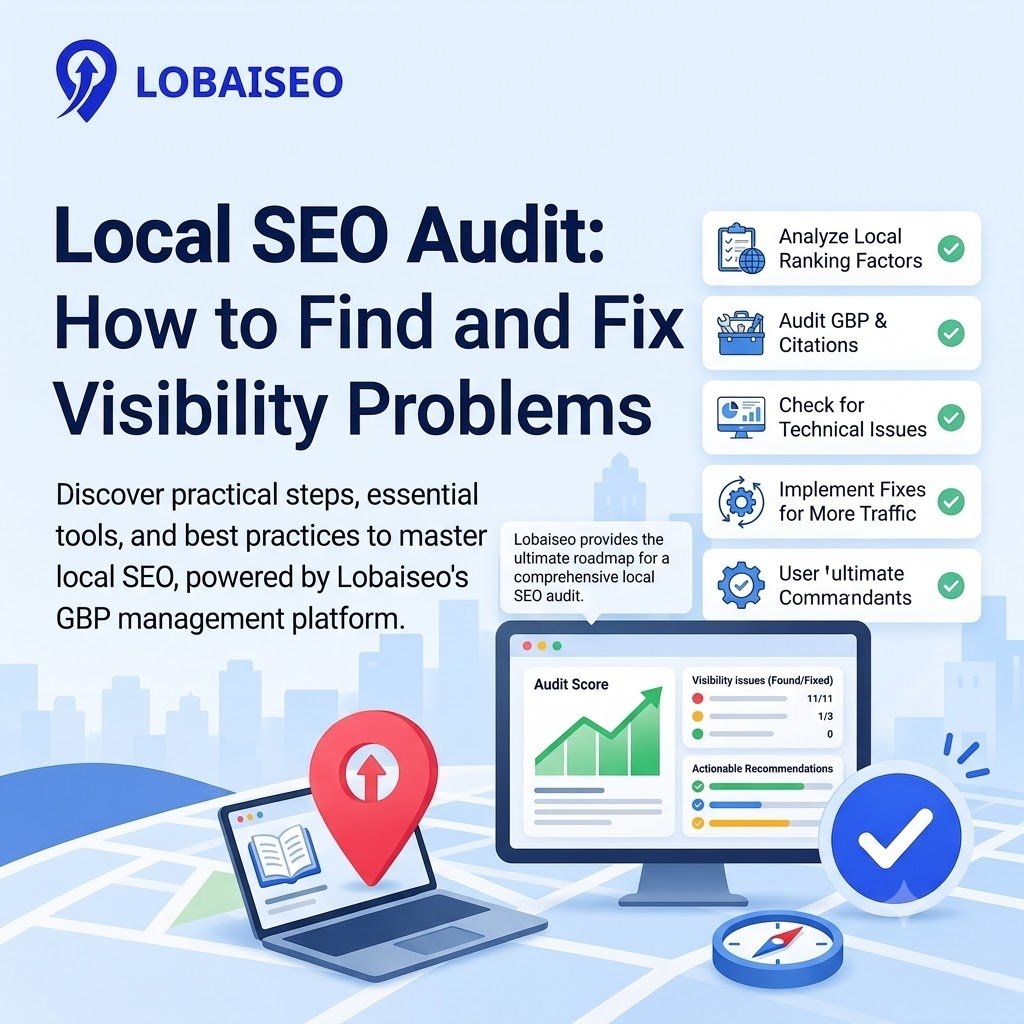
A complete local search audit should check Google Business Profile accuracy, NAP consistency, categories, business hours, reviews, photos, website landing pages, local keywords, duplicates, and location-level rankings. Google recommends accurate business information and consistent real-world representation across locations.
For a local business SEO audit, compare each location against the same checklist. Review google business profile insights for searches, views, calls, directions, and website clicks, then check the website for LocalBusiness structured data and location-page issues.
A practical workflow is simple: export the location list, check GBP data, compare website and directory information, identify duplicates or missing profiles, review visibility and conversions, then assign each issue to an owner. For large networks, a GBP audit should be repeated at location level rather than relying only on an overall brand report.
How Do You Prioritize Local SEO Issues After An Audit?
Not every issue deserves the same attention. Begin with the issues that might immediately impact visibility or client behavior, such as suspended profiles, incorrect company information, duplicate listings, improper categories, missing locations, or incorrect hours. A local SEO checker can help speed up the discovery process, but someone still needs to examine each major issue.
Rank remedies based on three factors: business effect, number of sites impacted and urgency. A wrong phone number across 200 dealer profiles is more significant than a tiny picture problem on one listing. After fixing critical issues, monitor google business profile insights, rankings, calls, directions, and website visits to confirm improvement. Google also allows performance data for multiple profiles to be downloaded for comparison.
At Lobaiseo, we have seen the same pattern across hotels, villas, dealer networks, and service businesses: fixing the underlying location data is often more valuable than making isolated profile changes. We also cover practical GBP issues in our YouTube Shorts, including verification and profile-management problems.
FAQs
A local SEO audit is a review of the factors affecting a business’s visibility in local search. It audits Google Business Profiles, NAP, categories, reviews, websites, location pages, rankings, citations and technical issues that can be holding your local exposure back.
How do I perform a local SEO audit?
First, make a list of all locations and examine their Google Business Profile, website page, NAP data, category, hours, ratings and rankings. Then look for duplication, missing data, technical issues, and performance gaps. Fix high-impact problems first and track results.
What should a local SEO audit include?
Local business SEO audit must include: Google company Profile correctness, NAP consistency, categories, reviews, photographs, hours, duplicates, citations, local landing pages, structured data, rankings and performance statistics. For brands with many locations, each site should be examined individually.
How often should a local SEO audit be done?
Most multi-location organizations should do a full local search audit at least periodically. Bigger networks can require monthly inspections for profile changes, duplicate listings, inaccurate information and abrupt performance decreases, along with more in-depth audits at regular intervals.
Can local SEO audits be automated?
Yes. A local SEO audit tool can automate the checking for NAP discrepancies, missing information, duplicate listings, rankings, and other typical concerns. But technology should supplement human evaluation, as profile changes, regulatory challenges and local issues frequently require context.