It is hard to compare local competition when you have hundreds of locations with varied phone numbers, old addresses, inconsistent Google Business Profiles, or dealer-maintained listings. At Lobaiseo, we analyze each market individually to see what local firms do well and where local search can improve.
What Should You Compare When Analyzing Local Competitors?
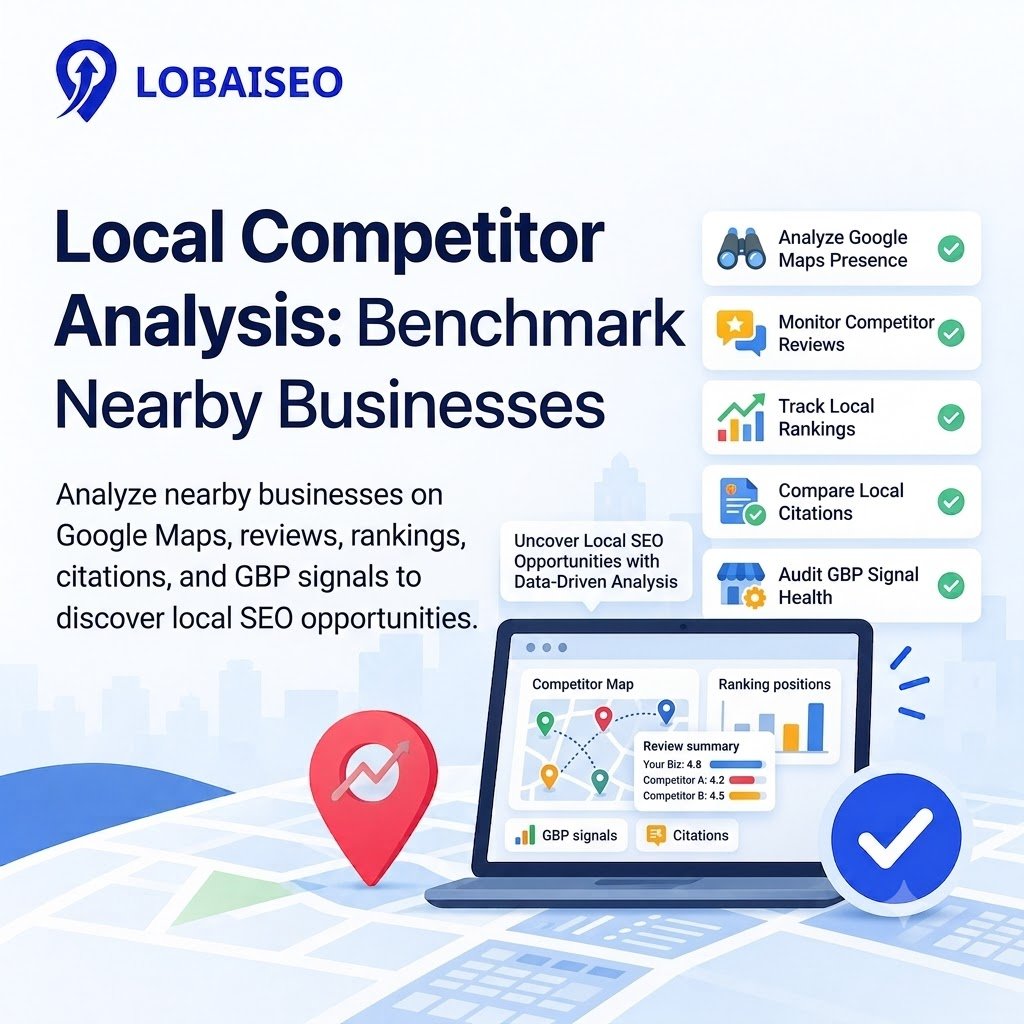
A practical local SEO competitor analysis compares Google Business Profile categories, reviews, ratings, services, website pages, and local visibility. Check NAP consistency local SEO signals by comparing each business’s name, address, and phone number across its website and relevant directories. Review local citations SEO to identify missing or incorrect listings.
For example, an AC service company may have fewer recent reviews or incomplete service information than nearby competitors. Record these differences for each market, confirm which gaps matter to customers, and prioritise corrections instead of copying another business’s strategy.
How Can Competitor Data Reveal Ranking Opportunities?
A local SEO competitor study can reveal what adjustments can help you reduce the gap between your locations and adjacent companies. If your rivals are more visible on Google Maps check their categories, service pages, reviews, and relevant local mentions. Rankings for the same queries at locations. Use the findings to fix profile gaps, improve location pages, and strengthen competitor local SEO without copying competitors or assuming that one ranking factor explains every result.
For larger networks, we at Lobaiseo recommend recording each location’s baseline, assigning fixes to the right team, and checking results regularly. Our YouTube Shorts also cover practical Google Business Profile issues that can affect local visibility.
FAQs
Local competition analysis involves comparing companies around you on Google Search and Maps. It looks at rankings, business profiles, reviews, website pages, and citations to uncover gaps and practical solutions to boost local presence.
How do I analyze local SEO competitors?
You may search your major services using location-specific keywords, find firms that show on Maps and in organic search, and compare their profiles, ratings, pages, and citations. Document your observations at each site, identify any obvious gaps, and record changes over time.
What should I compare in Google Maps?
Compare primary vs. extra categories, ratings, review volume and recency, business data, photographs, services, and exposure for relevant searches. Results depend on where you search, so look for similar search areas.
How can competitor analysis improve local rankings?
It shows no services, inadequate profiles, bad location pages, no citations. Focus on fixing the most important issues and then watch visibility for those same searches. There are no guarantees of rankings since Google takes a number of variables into account, including relevancy, distance, and popularity.
Can local competitor analysis be automated?
Yes. Local SEO tools can analyze map ranks, check reviews, audit citations, and compare several locations. Automation makes it easier to identify reoccurring issues, but teams should still go over unexpected changes, validate business information, and determine which repairs matter most.