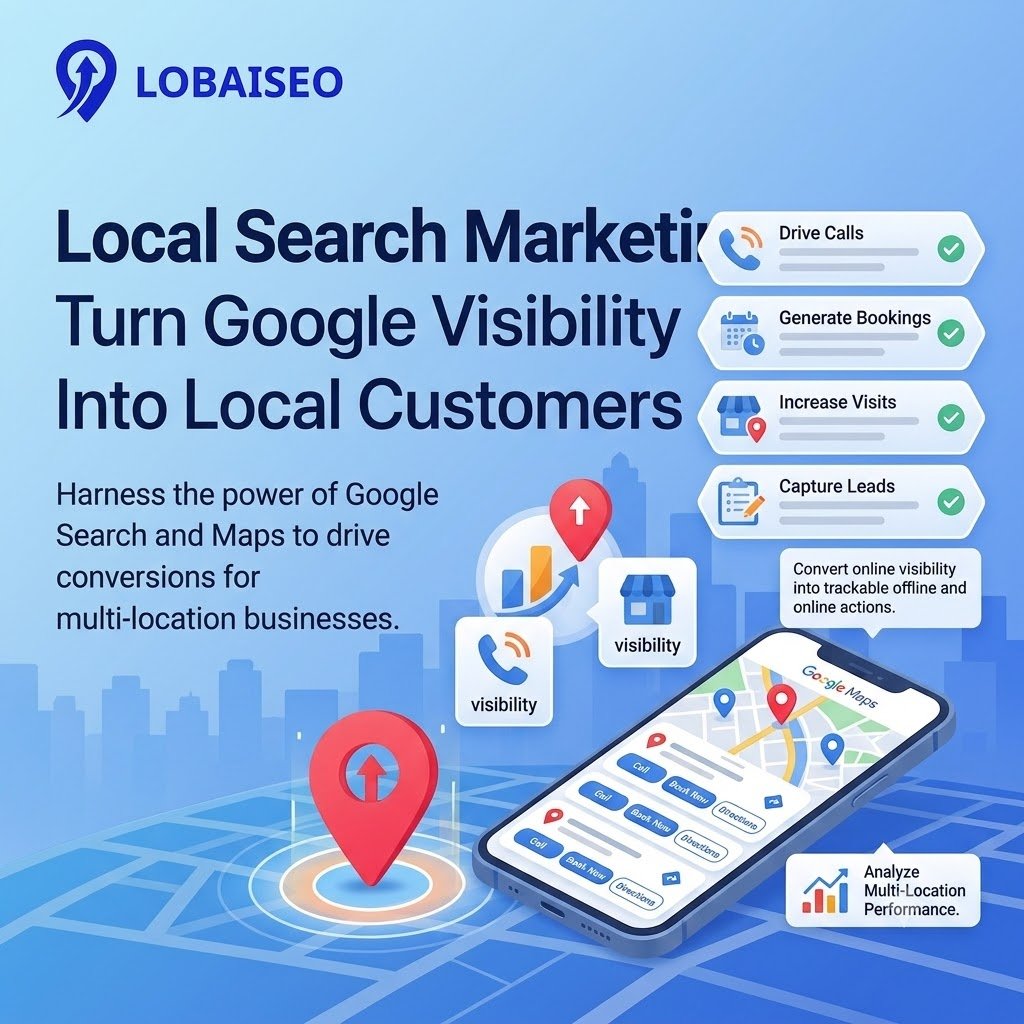
A common challenge for multi-location companies is one location scores highly while another disappears from local search results. Rogue edits, inconsistent NAP, stale profiles, and dealer-level variations can eat away at local exposure over hundreds of listings. We see this all the time at Lobaiseo while handling mass Google Business Profiles across multiple sectors.
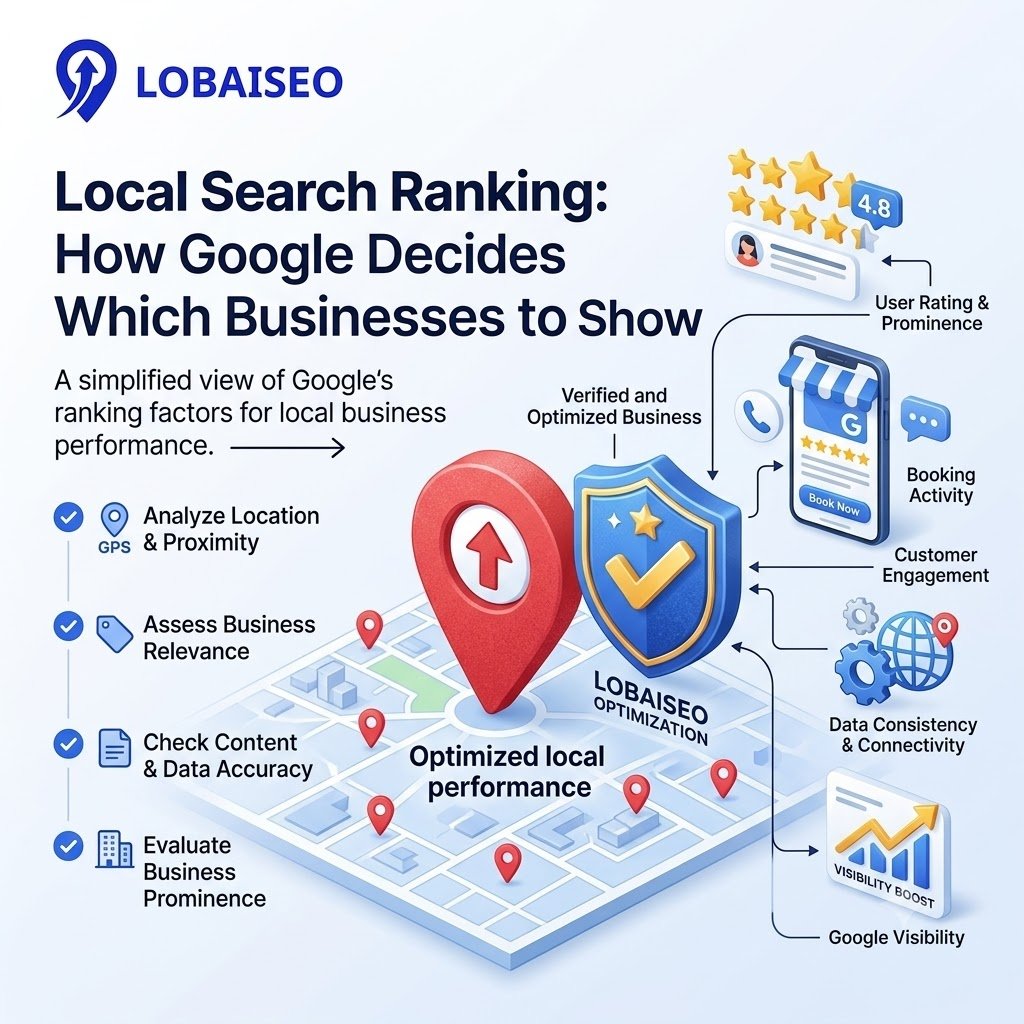
Google doesn’t treat every area equally. It uses relevance, distance, and prominence, plus indications from the business profile, website, reviews, links, and activity, and user activity.
How Does Google Determine Local Search Rankings?
The biggest mistake is treating every Google Business Profile as if it has the same ranking potential. GGoogle considers relevance, distance and popularity when choosing which companies show for a search. Your category, services, personal details, reviews, website content, and location are these considerations.
For example, an AC firm could show up in one neighborhood for “AC repair near me” since its profile is a good fit for the service and it’s close to the searcher. Another branch can offer the same service, but be ranked lower due to an incomplete profile, less favorable ratings or a greater distance. These are important local ranking signals.
Google also uses information from across the web to understand a business. Consistent NAP details, relevant local links, reviews, and accurate business information can support Google local rankings. We regularly cover practical GBP issues such as verification, profile optimisation, and review management on Lobaiseo’s YouTube Shorts, which can be useful when checking individual locations.
What Can Businesses Do To Improve Local Search Position?
Confirm that all locations have correct and comprehensive information. Business names, locations, phone numbers, categories, services, hours, photographs and landing pages should be consistent with the real location. For franchise and dealer networks, create a regular audit process instead of waiting for ranking problems to appear.
Next, compare locations instead of applying one strategy to every profile. A branch with 20 reviews and another with 300 reviews should not be treated as equally competitive. Local relevance, website authority, review frequency, profile activity and review quality vary greatly by place.
Track local search ranking for important services and locations over time. Look for patterns such as several branches losing visibility after profile edits or one region consistently outperforming another. At Lobaiseo, our operational approach across bulk GBP networks is to identify these differences first, then standardise what should be consistent while allowing genuine location-level differences.
FAQs
Local search ranking refers to where a business appears when someone searches for a product or service in a specific area. Local ranking determines whether a business appears prominently in Google Maps, the local pack, or other local search results.
Why is my business not ranking in local search?
The business may be weakly relevant, distant, not prominent, have inadequate profile information, poor reviews, inconsistent business facts or strong local competition. Google can also rank various locations differently even if they are owned by the same corporation.
How does Google rank local businesses?
Google mostly evaluates relevancy, distance and prominence. It also analyzes data from the business’ profile, website, reviews, links and other internet sources. Together, these characteristics decide which companies are most relevant to a certain local search.
How can I improve local search position?
Keep your Google Business Profile accurate, choose the right category, maintain consistent business information, collect genuine reviews, strengthen relevant website content, and build local authority. Monitor important local ranking signals regularly so problems can be identified before they affect visibility across multiple locations.
How can local rankings be tracked?
Track rankings by location, search term, and search area rather than relying on one overall position. Compare results over time and across branches. This makes it easier to identify changes in local visibility, competitor movement, and location-specific ranking problems.