Multi-location brands face a simple problem that becomes difficult at scale: keeping hundreds of Google Business Profiles accurate and consistent. Rogue edits, incorrect NAP details, outdated hours, and dealer-level changes can quickly create local search problems. We at Lobaiseo see this often when managing large location networks across different industries.
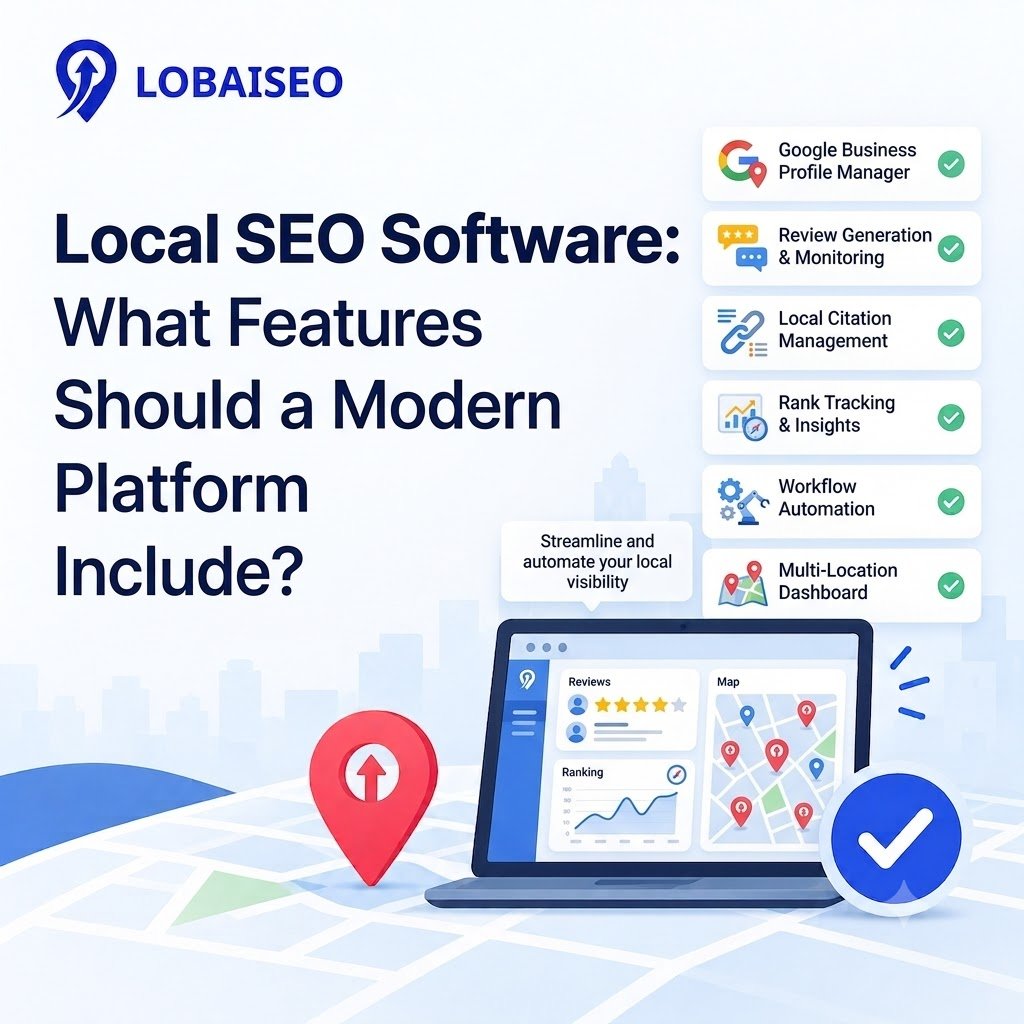
A modern local SEO software should bring profile management, local rankings, review monitoring, reporting, and automation into one place. The right platform reduces manual work while giving marketing teams control over what changes across every location.
Which Features Matter Most in Local SEO Software?
The main challenge with multi-location SEO is that as the number of listings increases, you lose control. A good local SEO platform should allow for mass modifications to GBPs, NAP administration, review monitoring, user permissions, location level reporting, and change tracking. The teams should be able to update 100s of listings without manually doing the same activity.
For example, a hotel chain changing its check-in time should not need to edit every profile separately. A strong local SEO management software setup can apply approved changes across locations while allowing local teams to manage information specific to their property. We also track these operational needs at Lobaiseo, particularly across dealer networks and hospitality businesses. Lobaiseo’s YouTube Shorts also cover practical GBP management and optimization issues that commonly affect local businesses.
When Should a Business Move From Spreadsheets to Software?
Spreadsheets work when a business has only a small number of locations and limited local SEO activity. Problems usually appear when teams manage dozens or hundreds of listings. Updating business hours, checking profile changes, tracking reviews, and preparing reports manually becomes slow and increases the chance of errors.
A noticeable symptom is the staff reviewing or updating listings for hours each week rather than building local presence. But when repetitious effort begins to impair accuracy and reaction time, then it becomes sense to switch to local SEO tools or local SEO automation software. The local search software platform should then be the hub for managing locations, tracking changes, and reporting results.
FAQs
Local SEO software is a platform used to manage and improve a business’s visibility in local search. It can include Google Business Profile management, local ranking tracking, review monitoring, listings management, reporting, and automation for businesses with one or many locations.
What should local SEO software include?
A modern local SEO platform should include Google Business Profile management, bulk updates, review monitoring, local ranking reports, listings management, user permissions, analytics, and automation. Multi-location businesses should also look for location-level controls and reliable reporting.
Who needs local SEO software?
Local SEO software benefits franchise brands, enterprise corporations, agencies, dealer networks, hospitality groups and multi-location enterprises. It is particularly helpful when teams have to handle many Google company Profiles and maintain accuracy and consistency of company information.
Can local SEO software automate repetitive tasks?
Yes. Local SEO automation software may do the heavy lifting on scheduled Google postings, review answers, reports, listing changes and other regular duties. It cuts down on manual work and helps teams keep consistency in their local SEO efforts across locales.
How much does local SEO software cost?
The price depends on the number of sites, features, users and amount of automation. Small firms may not need sophisticated local SEO tools and corporate systems are more expensive since they allow for bulk administration, more extensive reporting, permissions and wider geographical networks.