One of the hardest parts of multi-location SEO is maintaining hundreds of Google Business Profiles accurately. Rogue modifications, conflicting NAP data, out-of-date hours, and dealer-level changes—all of these can hurt local exposure. Here at Lobaiseo we find that the best results come when teams tackle local business SEO as one unified system, not as distinct geographic jobs.
Google states that local results are mostly affected by relevance, distance, and popularity. This means that profile correctness, location-specific website content, reviews, and consistent company information are vital elements of an effective local SEO strategy.
What Should A Local Business SEO Strategy Include?
You want to ensure your Google company profile, location pages, NAP correctness, reviews, related services, local links, and search performance are all in order as a local company owner. If you have a brand with 100 locations, before making changes, make sure there is one source of truth for names, addresses, phone numbers, hours, groups, services, and URLs.
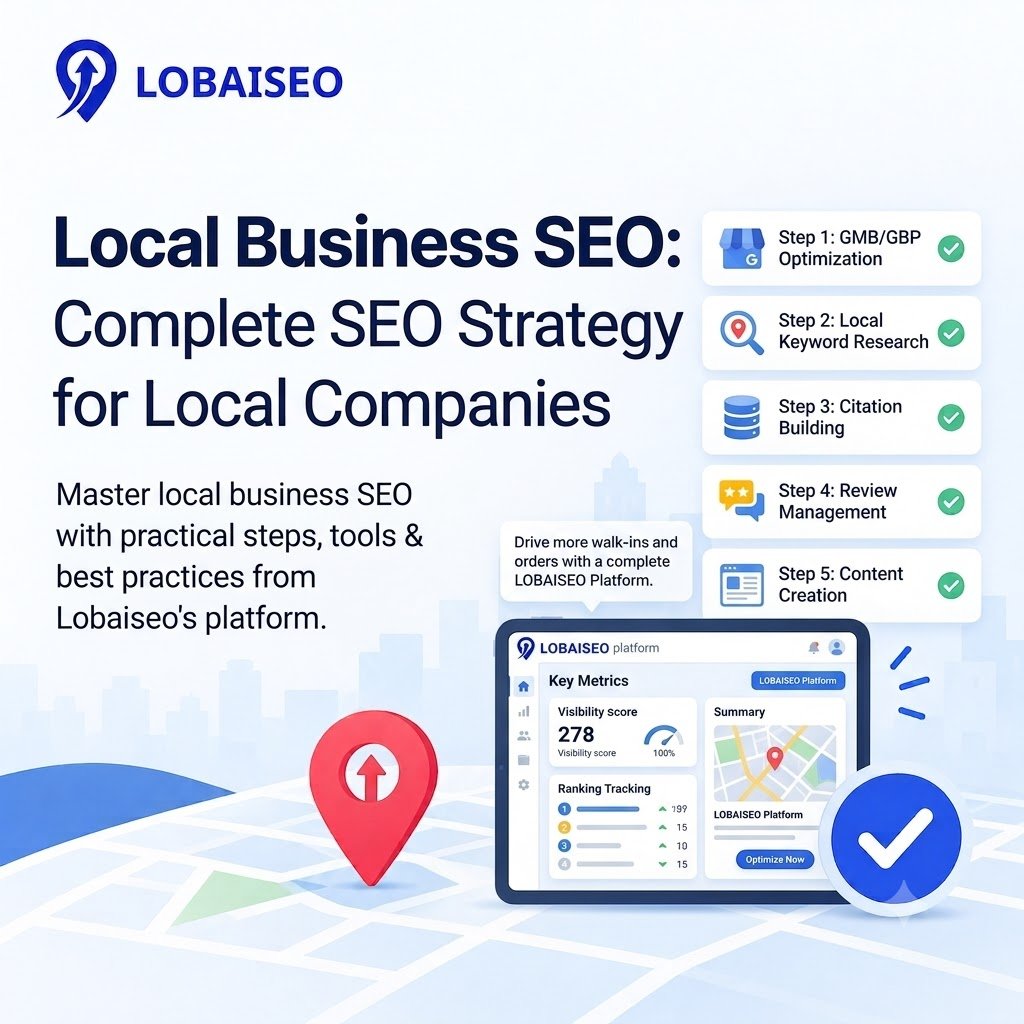
For example, Google allows businesses with 10+ locations to manage many sites at once. Use Business Profile Manager to review addresses, correct errors, and maintain up-to-date information. In practice, our workflow is audit locations, standardize data, fix profiles, improve location pages, monitor queries, and then repeat monthly. Lobaiseo uses this operational approach when handling bulk GBP work across different industries.
How Should Website SEO and GBP Work Together?
Local website SEO and Google Business Profile work best when both point to the same location information. A profile should be linked to the right location page, and that page should clearly reflect the company name, address, phone number, services, hours, and essential local information.
Google recommends LocalBusiness structured data to help describe business details such as address, hours, and other information. Use Search Console to compare queries, pages, impressions, clicks, and CTR, then improve pages based on real search data. We also cover practical GBP management and optimization topics through Lobaiseo’s YouTube Shorts for teams building a repeatable local search marketing process.
FAQs
GMB ranking refers to how prominently a business appears in Google Maps and local search results. Google says local ranking mainly considers relevance, distance, and prominence. The term “GMB” is the older name; Google now calls the product Google Business Profile.
What is local business SEO?
Local business search optimization is the process of improving a business’s visibility when people search for nearby products or services. It involves Google Business Profile maintenance, website optimization, reviews, local content, business information, and other signals that enable local presence.
How is local business SEO different from regular SEO?
Regular SEO is all about making yourself widely more visible in organic search. Small business local SEO emphasizes locality. It takes into account aspects such as distance, Google Business Profile information, local relevance, reviews, location pages, and local intent searches.
How do I start SEO for a local business?
Begin with a Google Business Profile, website, NAP details, location pages, reviews, and an audit of current search visibility. First, correct incorrect information. Then upgrade service and location pages, develop relevant local citations, and track searches and clicks with Search Console.
Does a local business need a website for SEO?
A website is not a must to show up in local results, but it can improve a business’ search visibility. A smartly developed website provides Google and consumers with more information about the services, locations, and the business itself. Google also supports local business structured data for applicable business pages.
How long does local business SEO take?
There is no time limit. Results vary by competition, geography, website quality, profile correctness, authority, and starting position. Getting on the map might take a while for a new firm. Google says it might take a month or more for new rankings for businesses to show up in search results.