
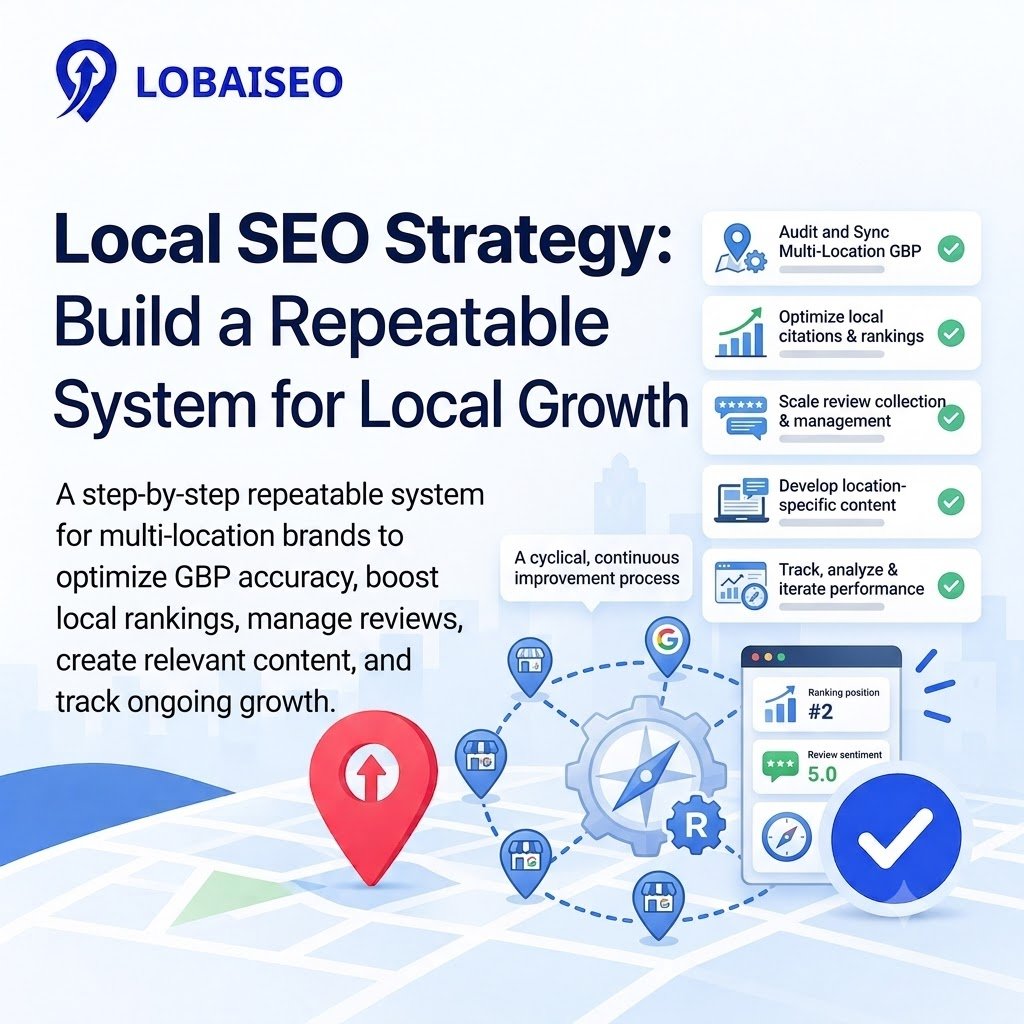
Multi-location brands face a simple but costly problem: one wrong phone number, address, category, or dealer edit can spread confusion across hundreds of Google Business Profiles. A strong local SEO strategy needs clear ownership, standard processes, and regular checks. At Lobaiseo, we see this firsthand when managing large location networks.
What Should A Local SEO Strategy Prioritize First?
The first objective must be to provide consistent, reliable company information, at every place. Don’t invest too much time in content and rankings without first checking names, addresses, phone numbers, categories, hours, websites, and service regions. This sets the stage for a good local search strategy and helps you avoid unnecessary profile difficulties.
Next, create one standard process for updates, reviews, photos, posts, and local pages. For example, a dealer network can use the same core rules while allowing each branch to add location-specific information. We recommend auditing profiles regularly rather than waiting for ranking or visibility problems. Our Lobaiseo YouTube Shorts also cover practical Google Business Profile issues that businesses commonly face.
How Can Businesses Build A Repeatable Local Growth System?
Local SEO effort is converted into a known methodology to establish a repeatable system. Build a local SEO plan around your location pages, profile management, reviews, local content, technical audits, and reporting. Then delegate ownership for each task and determine how often it should happen.
For example, a 200-location brand can perform monthly profile checks, weekly review monitoring, ongoing local content, and quarterly data audits. This is far more dependable than each branch doing SEO differently. A good local business SEO strategy should also include tracking calls, direction requests, website visits, rankings, and conversions so the team can understand which locations need attention.
FAQs
A local SEO strategy is a deliberate method of enhancing your business’s exposure in local Google searches. It includes Google Business Profiles, local pages, reviews, business information, content and performance tracking to get clients from specific places.
How do I create a local SEO strategy?
Begin by reviewing your Google Business Profiles and local website pages. Fix wrong business details. Set location guidelines, handle feedback, create helpful local content & monitor calls, visitors, ranks & conversions. Build them into a regular local SEO roadmap.
What should a local SEO strategy include?
A strong strategy should include Google Business Profile management, accurate business information, local landing pages, review management, relevant content, technical SEO, local citations, and performance tracking. The exact local marketing strategy should depend on the number of locations, industry, competition, and customer search behavior.
How long does a local SEO strategy take to work?
Results for local SEO vary based on industry, competition, geography, website strength and the state of current profiles. Some fixes are quick to show results, especially for serious problems, but building greater organic and local exposure is a process that takes months of focused effort.
Can local SEO strategy be automated?
Yeah. Automate repetitive processes such as profile updating, review monitoring, content publishing, reporting and managing several locations. Automation should be used to complement human supervision, especially in the case of odd changes to profiles, customer evaluations, verification problems, and location-specific information.
One thought on “Local SEO Strategy: Build a Repeatable System for Local Growth”