We have seen every local search mistake a multi-location brand can make. A franchisee edits the corporate description without approval. A dealer listing shows a disconnected phone number. Two branches of the same hotel chain use different versions of the same address. These small inconsistencies compound across hundreds of listings, and Google notices.
At Lobaiseo, we manage Google Business Profile SEO and bulk GBP operations across hospitality chains, dealer networks, and service providers. The work is not glamorous. It is fixing NAP data, aligning website pages with Google Maps SEO signals, and making sure every location tells Google the same story. Here is the practical strategy we use.
How Should A Local Business Combine Website SEO and GBP?
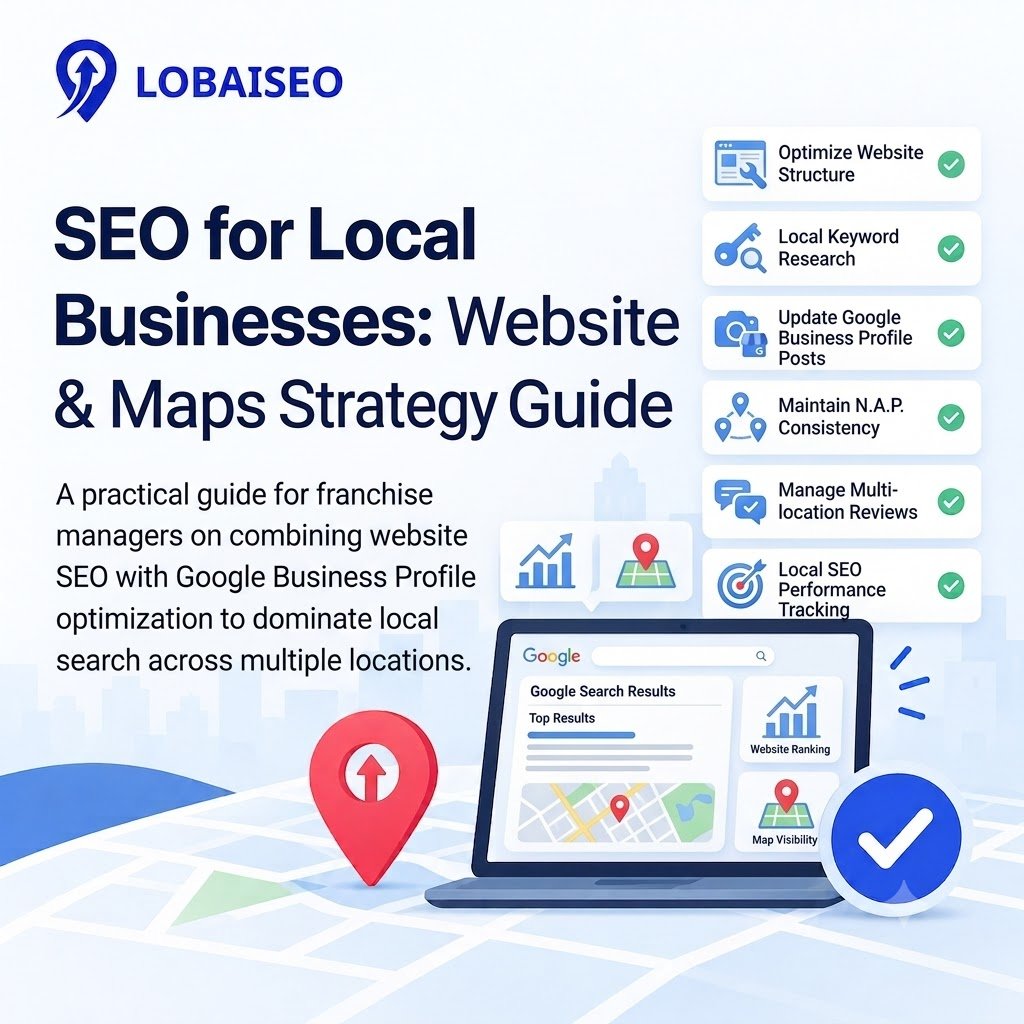
SEO for local businesses works when your website and your Google Business Profile reinforce each other. They are not separate campaigns. Google cross-references them, as confirmed in Google’s official guidance on local ranking.
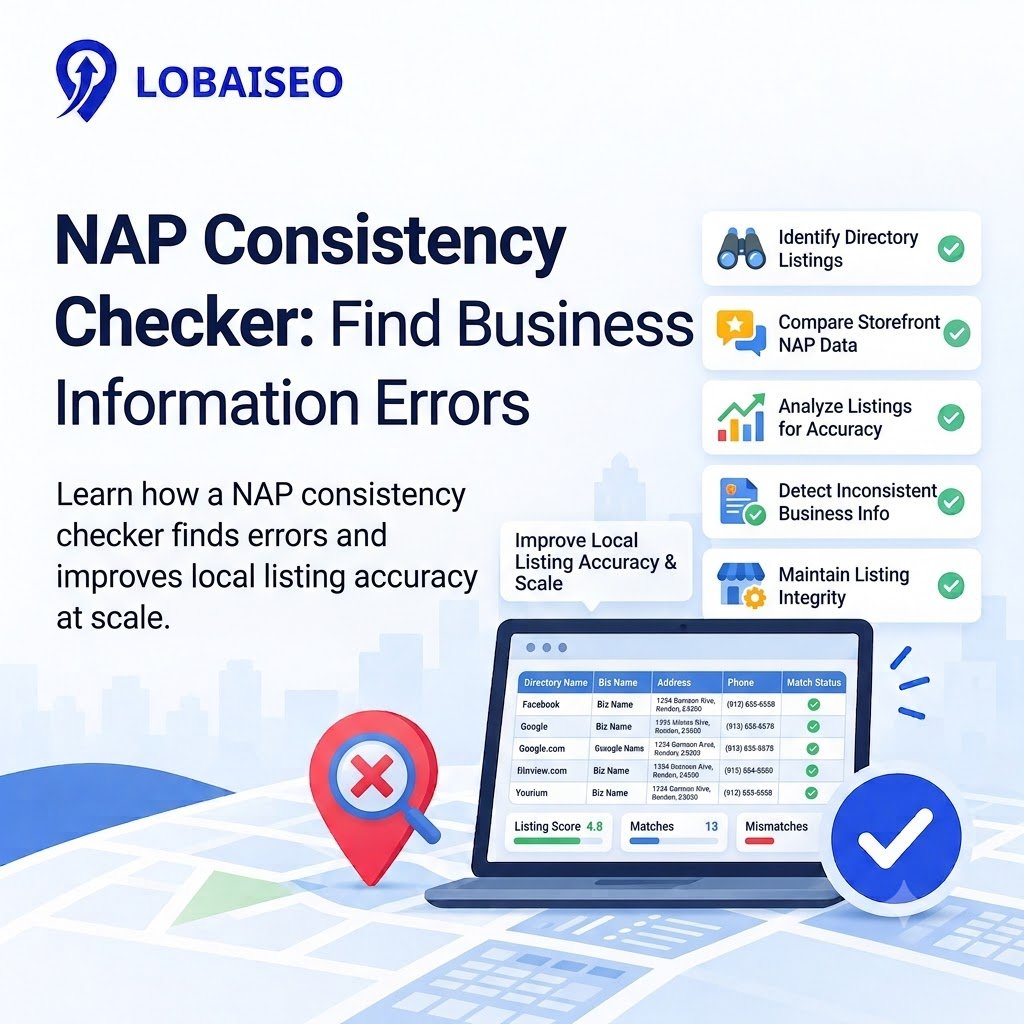
For local website SEO, your job is to prove that your website belongs to the same business as your GBP listing. Consistent name, address, and phone number (NAP) across both assets is the foundation. When a customer searches for your service plus their city, Google needs to verify that your website and your profile describe the same place, offering the same services, in the same location.
We see this break most often with service area businesses. A hotel chain’s corporate site lists the head office address. The GBP listing shows the actual property. Google gets confused. The fix is a dedicated location page for each property with matching NAP, an embedded map, and localized service descriptions.
Local search marketing for multi-location brands means treating each location as its own entity on both your website and Google Maps. The website gives Google context. The GBP gives Google confirmation. Together, they build the prominence signal that drives Map Pack rankings.
Which Website Pages Matter Most For Local Search?
Not every page on your site carries equal weight for local SEO for small businesses and enterprise brands alike. We have tested this across dozens of multi-location accounts. Four-page types do the heavy lifting.
Location pages are the SEO workhorses. Each physical location needs its own page with unique content, not templated copy with the city name swapped. Include the localized NAP, embedded Google Map, customer testimonials from that specific area, and mentions of nearby landmarks. These pages target the highest-intent searches: “AC repair in Bandra,” “dentist near Whitefield,” and “hotel in Jaipur.”
Service pages capture longer-tail queries and educate customers who are still deciding. They also help you rank in AI search results, where users ask more conversational questions about what you do.
Landing pages, including your homepage, handle conversion. Your homepage should focus on your primary service and primary location. It is where brand authority concentrates.
Brand pages — About, Team, Certifications, Process — build the trust that turns a search result into a phone call. Most businesses ignore these. They are often the reason someone picks you over a competitor with a similar GBP.
When teams weigh GBP management vs. agency options, the honest answer is that no tool fixes a website with no location pages. On the cost side, local SEO pricing in India varies widely, from a few thousand rupees monthly for single-location work to lakhs for enterprise networks. Build the page types first. Automation amplifies a solid foundation.
FAQs
It is the practice of optimizing your website and Google Business Profile so your business appears in local search results and Google Maps when nearby customers search for your services.
How do I do SEO for a local business?
Start with NAP consistency across your site and GBP. Build unique location pages. Keep your GBP complete with photos, posts, and review responses.
Does local SEO require a website?
No, but a website dramatically improves your local visibility. Google uses your site to verify your business identity and relevance for location-based searches.
How do website pages support Google Maps visibility?
Website pages confirm the information on your GBP. Consistent NAP, location keywords, and embedded maps tell Google your business is real, relevant, and trustworthy for that area.
One thought on “SEO for Local Businesses: A Practical Website and Maps Strategy”