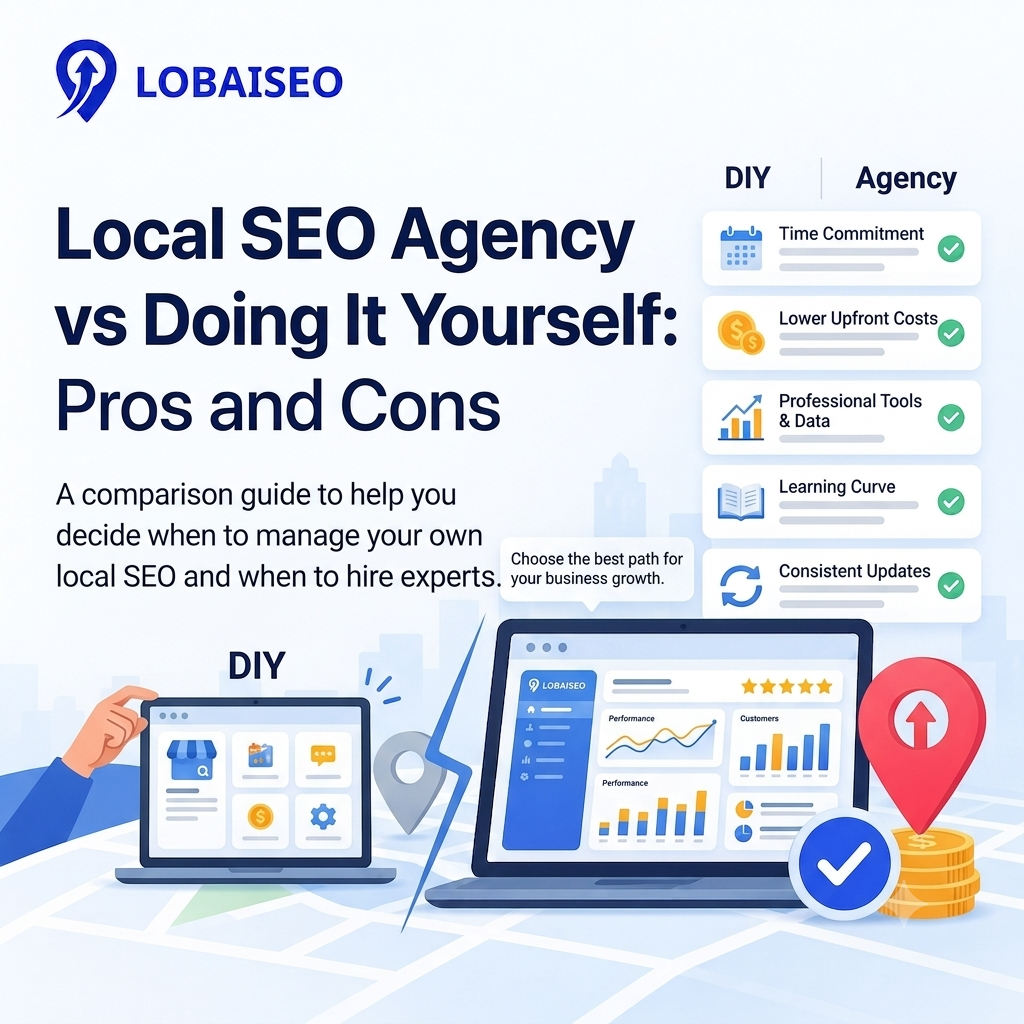
For a business with hundreds of locations, local SEO can become difficult fast. One wrong Google Business Profile edit, different NAP details, or outdated dealer information can create problems across many listings. The real question of local SEO agency vs. DIY is not just cost. The real question is whether your team has the time and systems to manage local search properly.
What You Can Realistically DIY as a Small Business Owner
A small business can handle many basic local SEO tasks without an agency. You can claim your Google Business Profile, correct business details, add photos, respond to reviews, publish updates, and check how your listing appears in Google Search and Maps. These are useful parts of local SEO for small business owners.
Start with a weekly routine. Check your profile information, answer new reviews, add useful photos, and review customer questions. You can also use some of the best free local SEO tools to check rankings, listings, keywords, and website issues. For a single location, this work is often manageable when someone owns the task.
Lobaiseo’s YouTube Shorts also cover practical Google Business Profile tasks that businesses can follow when handling local search work themselves.
Where DIY Local SEO Usually Falls Short
The problem starts when local SEO becomes a large, ongoing task instead of a simple checklist. A business may update its profile once but fail to monitor changes, reviews, categories, photos, service areas, or incorrect information over time. With multiple locations, these gaps become harder to spot.
For example, a franchise with 200 locations may have different phone numbers, old opening hours, missing services, or inconsistent business names across listings. Fixing one profile is simple. Finding and correcting the same issue across hundreds is not. DIY local SEO can also take valuable time away from marketing and operations.
Pick a DIY but have a clear ownership scheme. Determine who evaluates listings, who reviews updates, who authorizes changes, and how frequently location audits are conducted. If such chores continue to be put off, professional help is worth considering.
What an Agency or Software Adds That DIY Can’t
The biggest difference is scale, consistency, and ongoing control. An agency or dedicated software can turn local SEO into a repeatable process instead of relying on someone to remember individual tasks. This matters when a brand operates many stores, dealers, hotels, villas, or service locations.
At Lobaiseo, we see this clearly when working across large location networks. A change that takes a few minutes for one profile can become a much larger operational task when the same work involves hundreds of Google Business Profiles. Bulk operations, monitoring, reporting, permissions, and location-level workflows reduce this manual load.
The right setup also depends on the task. For example, a firm may compare AI GBP management with agency support. Software can do the repetitive operational tasks, an agency can bring in human assessment, planning, and troubleshooting. Know your location count, monthly workload, approval procedure, and reporting needs before you decide.
A Simple Framework to Decide What’s Right for You
Start with four questions: How many locations do you manage? How often do profiles need changes? Who owns local SEO internally? What happens when a listing has a problem? A single location with stable information may be suitable for DIY. A large network needs a more structured process.
For local SEO for small businesses, start with the basics and monitor how much time your team spends each month. If rankings, reviews, profile updates, and listing accuracy are becoming better without affecting your other job, keep going. If you keep missing duties, establish a better system or get local SEO agency help.
For multi-location brands, evaluate the workflow before you commit to a long-term configuration. Audit a sample of sites, write down common issues, estimate the monthly effort, and compare that cost with expert help. The selection should be based on actual workload and company demands, not just agency costs.
FAQs
Yes. A company at a single location may manage its own profile updates, reviews, photographs, basic citations, and local content. The most important thing is regularity and having adequate time to often check the profile.
What local SEO tasks are hardest to DIY?
Basic profile modifications are often less complicated than managing several Google Business Profiles, which involves maintaining information consistency, tracking changes, dealing with difficult verification concerns, and reporting location-level performance.
Is DIY local SEO enough for a small local business?
It can be. A small business with one or a few locations can manage basic local SEO for small business tasks internally. The workload becomes harder when competition, locations, or ongoing profile issues increase.
When should a business move from DIY to professional help?
If local SEO is taking too much time from your staff, critical tasks are being ignored, locations have inconsistent information or your team cannot monitor and maintain all profiles consistently, seek expert help.