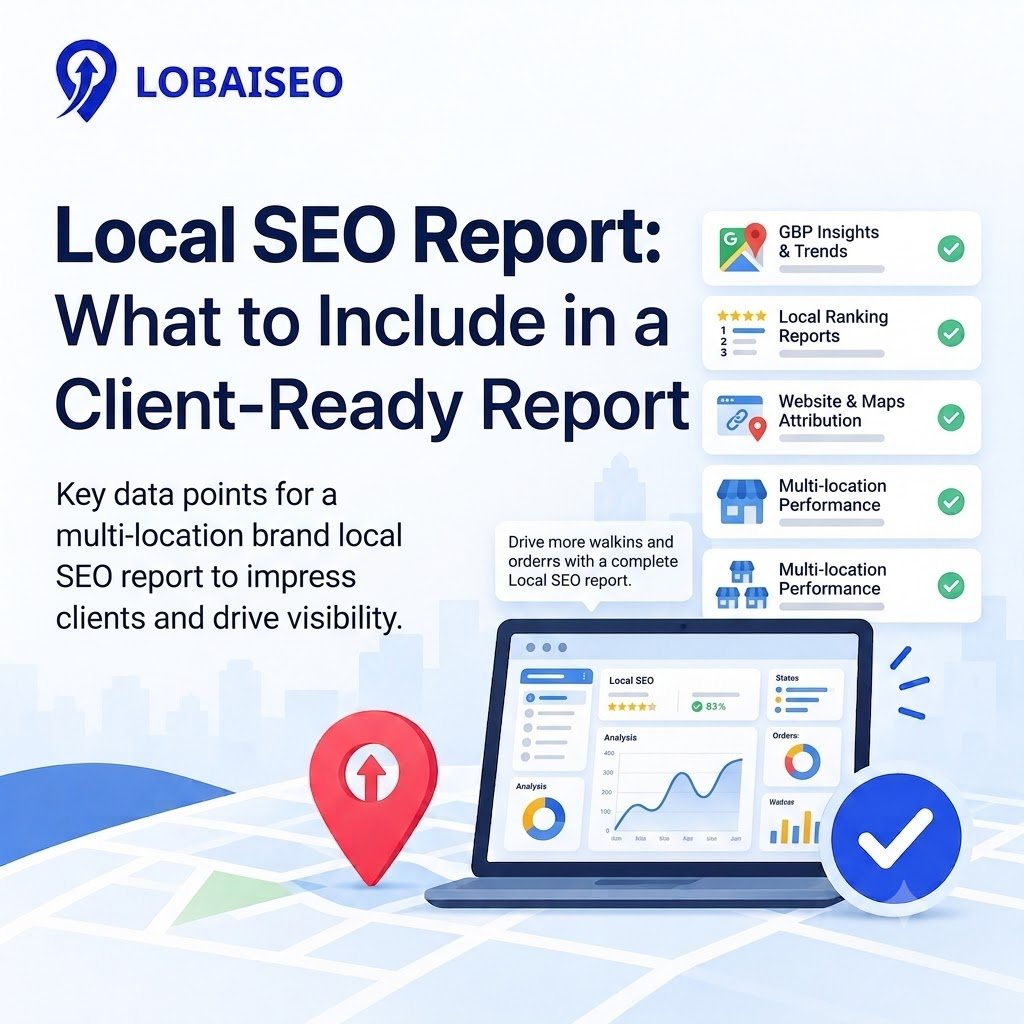
Managing hundreds of Google Business Profiles means dealing with rogue edits, inconsistent NAP data, and dealer discrepancies daily. We at Lobaiseo see these issues constantly across hospitality chains and dealer networks. A proper local SEO report doesn’t just show numbers—it reveals where your listings are broken and what’s costing you customers.
How Should a Local Business Combine Website SEO and GBP?
Your website and Google Business Profile are two halves of the same system. The website builds topical authority and entity signals. The GBP captures local intent and drives calls, direction requests, and website clicks. A local SEO report should show how both work together—not treat them as separate channels.
When website pages target the same service and location terms your GBP already ranks for, you reinforce your entity across both surfaces. If your GBP shows searches for “emergency AC repair Delhi” but your website has no page for that service, you’re losing a direct conversion path. This gap should be the first thing flagged in any local ranking report.
The operational takeaway: never review GBP metrics without checking the corresponding website pages. We’ve seen multi-location brands with an effective Google business profile insights, but weak landing pages leave thousands of leads on the table. And when you’re planning budgets, it helps to understand how local SEO pricing works before you scale reporting across dozens of locations.
For a visual breakdown of how local search behavior works in practice, check Lobaiseo’s YouTube shorts on local search patterns.
Which Website Pages Matter Most for Local Search?
Location pages and service pages are essential. Each physical location needs its page with the city name, embedded map, local phone number, hours, and location-specific testimonials. Generic service pages should target the core service terms your GBP categories cover.
A local SEO report should track whether these pages are indexed, what local SEO reporting shows about their organic traffic, and how they correlate with Google Maps ranking report movements. If your Delhi location page gets traffic but your Gurgaon page doesn’t, that’s a structural problem—not a content problem.
The GBP report tells you what people search for. The website page explains why they should choose you. When these two misalign, you pay for visibility without conversion.
A local SEO dashboard that shows both together gives you the full picture. Without it, you have to guess which side of the equation is broken.
FAQs
Local SEO helps your business appear in Google Search and Maps when nearby customers search for your services. It combines Google Business Profile optimization with website signals and consistent business information across directories.
How do I do SEO for a local business?
Claim and optimize your Google Business Profile. Build location-specific pages on your website. Keep your name, address, and phone consistent everywhere. Collect reviews. Track your local ranking report monthly to see what’s working.
Does local SEO require a website?
No, but it works better with one. A Google Business Profile alone can generate calls and direction requests. A website reinforces your authority and gives you more surface area to rank for service and location keywords.
How do website pages support Google Maps visibility?
Your website sends location and service signals that Google uses to verify your relevance for local queries. Pages that mention your city, services, and local proof strengthen your entity association, which supports your Google Maps ranking report performance.