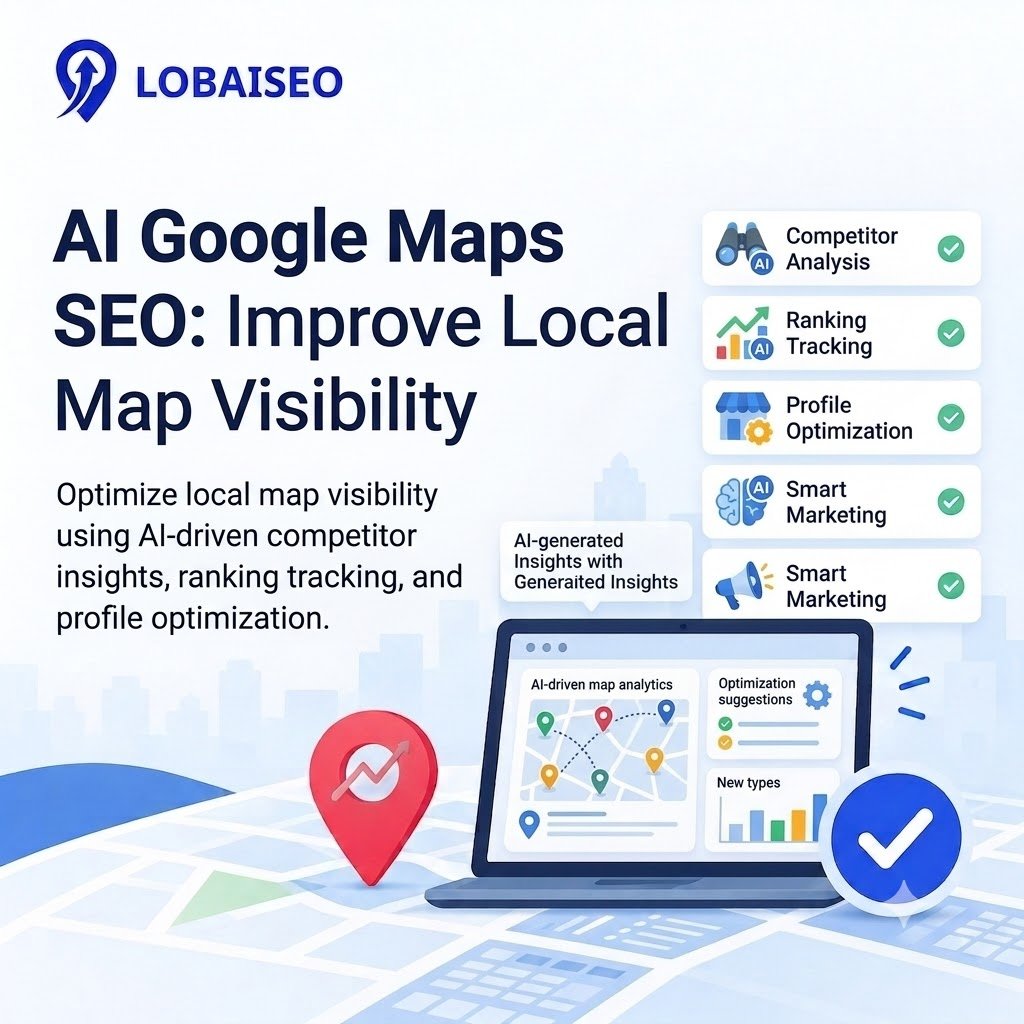
Businesses with multiple locations can struggle to keep their Google Business Profiles up to date and competitive. AI Google Maps SEO helps teams analyze local search data, identify holes in their optimization, and automate repetitive processes. Lobaiseo is an automation specialist, but one who ensures major decisions are founded on genuine business needs.
How Can AI Assist with Google Maps SEO?
Artificial intelligence may help you Google Maps optimization by analyzing your search performance, identifying missing personal information, tracking changes in local rankings, and tracking your rivals. For example, a hotel firm can search through all its locations and uncover profiles that do not list all services, have incorrect hours, or lack numerous client evaluations.
Rather than verifying each profile by hand, teams may use local SEO software and local marketing automation to manage jobs that need to be repeated over and over again in numerous areas. Standard artificial intelligence may also assist organizations in understanding what clients in the region are looking for and locating content possibilities that are relevant to them. Use AI findings to create objectives for Map Pack SEO, then check adjustments before uploading.
Our Lobaiseo YouTube channel shares practical insights on Google Business Profile management and local search.
Which Maps SEO Tasks Should Remain Human-led?
Artificial intelligence can help you organize data and recommend adjustments, but it cannot make choices for you. Business owners and marketing teams need to review changes to business names, locations, organizations, operating hours and service details before they make changes public. Bad edits might mislead buyers and create complications across several listings.
Also, when consumers complain about terrible service or review answers, these too need to be written by a human. “Machines should do routine tasks and people should make important decisions,” says Lobaiseo. Follow Google’s Business Profile guidelines to help ensure your entries are accurate and valuable. For local SEO for small business and large networks alike, the best workflow is to use AI to identify issues, verify the facts, approve changes, and measure results. Google also advises you need to produce accurate and helpful information on your pages and not merely create pages to modify your results.
FAQs
AI Google Maps SEO utilizes local search data, identifies profile issues, does competition analysis, and prepares optimization activities with the use of artificial intelligence. It gives you access to manage your Google Business Profile; it doesn’t guarantee improved results.
Can AI improve Google Maps rankings?
AI is able to discover holes in local content, gaps in company knowledge, and bad review management chances. Rankings are also about how significant something is, how far away it is, and how well known it is. AI is unable to assure you’ll be at the top of Google Maps.
How can AI analyze local competitors?
AI may evaluate publicly-available information about rivals. This includes business information, reviews, services, photos, and website content. This information may assist marketing teams in spotting the gaps and building solutions to fill them, instead of just imitating the strategies of other organizations.
Can AI track Maps rankings?
Yes. Some local SEO tools track the changes of keywords and localities over time in the Google Maps results. Teams shouldn’t rely on just one ranking report, because results may vary based on where, how, and what you look for. They should, instead, look at the trends.
Is AI useful for local map pack optimization?
Yes, artificial intelligence may assist in identifying gaps in profiles, organizing replies to reviews, assessing rivals, and monitoring how local search is doing. Strong Map Pack SEO still requires accurate details about the business, authentic evaluations from consumers, and continual oversight by humans.