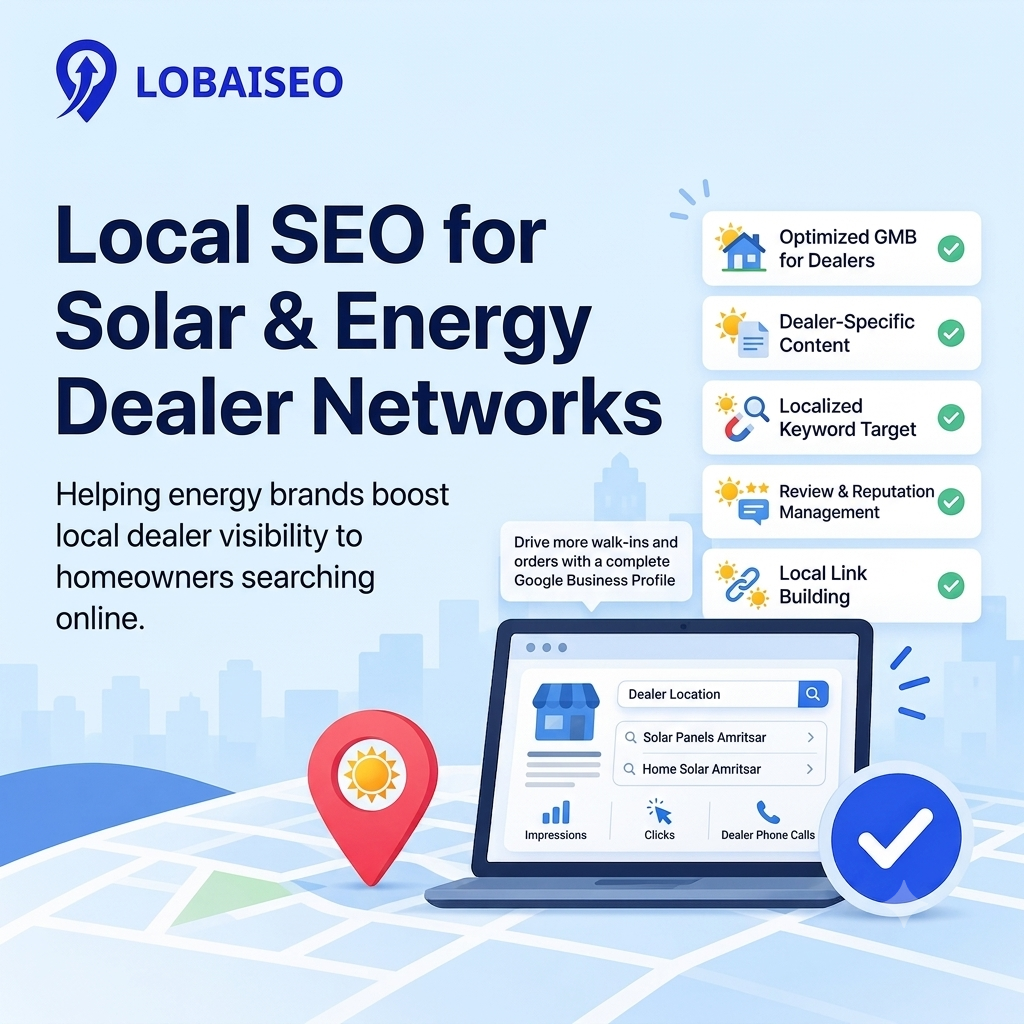
Multi-location solar networks often face the same local search problem: dealer names, phone numbers, categories, and service areas differ across Google Business Profiles. These gaps can weaken trust and create ranking issues. Local SEO for solar dealer networks needs one clear process for managing every location without removing local relevance.
At Lobaiseo, we see this issue across large dealer networks and other multi-location businesses. The practical approach is to keep core business information consistent while allowing each dealer profile to reflect its actual market, services, and customer needs.
How Homeowners Search for Solar Installers Locally
Homeowners rarely search only for a company name. They use terms such as “solar installer near me,” “solar company in [city],” or “best solar panel installer nearby.” Google then uses location, relevance, profile information, reviews, and other signals to decide which businesses appear locally.
For a dealer network, this makes each location important. A properly completed solar installer Google listing should use the correct business name, local phone number, category, address, hours, services, photos, and website link. The workflow should start with an audit of every location. Next, fix incorrect information, remove outdated details, and check whether each profile represents a real customer-facing location. Track local rankings after these changes instead of judging the entire network from one city.
GBP Challenges Specific to Solar Dealer Networks
Large solar networks have more moving parts than a single local business. Dealers may use different names, phone numbers, landing pages, categories, or service areas. Some locations may also create new profiles without checking whether a listing already exists. This can lead to duplicate GBP listings, conflicting information, and ownership problems.
A strong solar dealer SEO process starts with a master location database. Keep the approved business name, address, phone number, website, category, hours, service area, and profile status for every dealer. Then audit profiles regularly. Check for duplicate listings, unwanted edits, suspended profiles, and changes made by users or former agencies.
We at Lobaiseo treat bulk GBP work as an operations task, not just a content task. The same control process can be applied to dealer networks, hospitality groups, and other businesses with many locations. A useful next step is to document the process in a location-level checklist and review exceptions every month.
Building Trust Through Reviews in the Solar Industry
Solar is a high-consideration purchase. Customers may compare several installers before requesting a quote. Reviews can therefore answer questions that a business description cannot. Customers want to know whether installers arrive on time, explain costs clearly, complete installation properly, and respond when problems occur.
The error is to think about reviews as a one off effort. A better procedure is to always solicit feedback following major client milestones. Respond to both good and bad evaluations with precise and helpful comments. Don’t replicate the same response to hundreds of places.
Each dealer should also monitor review trends locally. Look for repeated complaints about installation delays, communication, warranties, or after-sales service. These patterns can reveal operational issues that marketing teams may otherwise miss. Lobaiseo’s short videos also cover practical Google Business Profile actions that businesses can apply while building stronger local visibility.
Optimizing GBP for High-Consideration Purchases
A solar customer needs more information before making contact than someone looking for a nearby café. The Google Business Profile should therefore answer basic questions before the customer reaches the website. Services, photos, business hours, contact details, reviews, and relevant updates should all match the actual dealer operation.
For multi-location SEO, start by creating a consistent profile structure for the entire network. Then localize what genuinely differs between branches, such as service areas, photos, offers, contact details, and customer experiences. Do not copy identical content across every location.
A practical workflow is simple: audit the profiles, correct core information, improve service details, add useful local content, monitor reviews, and track rankings by location. For networks that also sell related products or services, such as a Google listing for an EV dealer, keep each profile focused on the actual business represented at that location.
FAQs
Solar firms may boost Google Maps exposure with proper GBP information, suitable categories, authentic reviews, valuable local content, and local relevance. Multi-location dealer networks require consistent monitoring.
How important are reviews for solar dealer businesses?
Reviews matter since buying solar is about trust and a lot of money. Fresh, real reviews let buyers compare installers and see how good the service is. Active client engagement is also seen in regular answers.
Do solar dealer networks need centralized GBP management?
Yes. Centralized administration ensures correct corporate information across locations, yet allows each dealer to maintain local information. It also helps to identify duplicate profiles, wrong modifications, ownership concerns and missing data.
How long does a solar dealer’s GBP take to start ranking?
There is no specific time limit. Results will vary based on competition in the area, quality of the profile, reviews, relevancy, and how authoritative the business already is. It is common for new profiles to require ongoing adjustment and monitoring before substantial local ranking changes are seen.