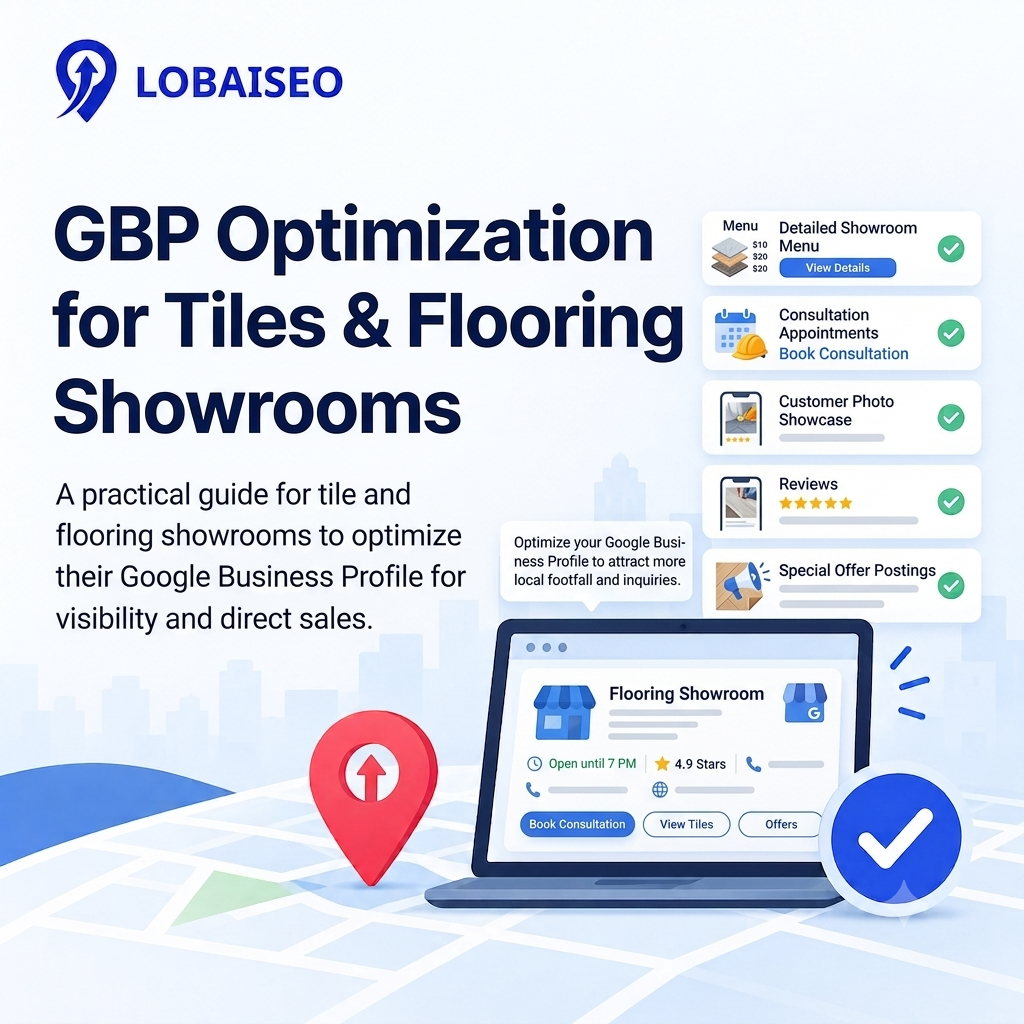
Rogue edits, inconsistent phone numbers, wrong showroom hours, and dealer-level differences can weaken a large tile network’s local visibility. GBP optimization for tile showrooms starts with accurate location data, correct categories, strong product signals, and regular review management.
At Lobaiseo, we see the same pattern across large dealer networks: one weak profile can affect local customer discovery even when the wider brand is well known. Google says local results mainly consider relevance, distance, and prominence.
Why Tile Showrooms Need Strong Local Search Presence
A customer searching “tiles near me” usually wants a showroom they can visit, not a national brand page. A weak tile showroom Google listing may have the right brand name but outdated hours, incomplete categories, poor photos, or an incorrect map location.
The fix starts with location-level accuracy. Please confirm the name, address, phone, website, hours, major category and map pin of the showroom. Then check photographs and customer reviews. “Complete and accurate Business Profile information can help improve local visibility,” says Google.
For a 100-location dealer network, use one master data sheet and assign an owner for every location. Compare GBP data against the website and store records each month. This creates a practical tile dealer SEO workflow instead of treating every profile as a separate task.
Showcasing Products and Catalogs on Google Business Profile
Tile buyers often compare styles before visiting a showroom. Generic storefront photos do little to answer what the location actually sells. A stronger profile should show real flooring displays, bathroom tiles, wall tiles, slabs, showroom interiors, and popular product ranges.
Google allows eligible retail businesses to display in-store products through the Product Editor. Product images can appear directly on Business Profiles in Google Search. For 10 or more locations, Google also supports bulk photo uploads.
Create a location-specific content workflow. Match product photos to actual showroom inventory where possible, replace outdated displays, and keep images clear and realistic. This matters for flooring dealer local SEO because customers can judge the showroom before deciding to travel there.
For a practical visual example, a relevant Lobaiseo YouTube Short can also be linked from this section when explaining how businesses can keep their Google profiles active and useful.
Managing Reviews Across Multiple Showroom Locations
Review management becomes difficult when every showroom receives its own customer feedback. A common problem is central teams replying too slowly while local teams respond inconsistently. Both can make the network feel disconnected.
Build a review process around location ownership. Check new reviews regularly, route complaints to the correct showroom team, and keep replies specific to the customer’s experience. Google confirms that verified businesses can respond to customer reviews and flag reviews that violate its policies.
For SEO for multiple locations, track review volume, rating changes, unanswered reviews, and recurring complaints by store. A central dashboard can reveal patterns that individual managers may miss. At Lobaiseo, we apply this same bulk-location approach across industries ranging from hospitality and hotels to dealer networks and local service businesses.
Common Mistakes Tile Dealer Networks Make on GBP
Large networks often create multi-location GBP issues because local managers make changes without following one shared standard. Common examples include adding keywords to business names, choosing inconsistent categories, using old phone numbers, uploading identical photos everywhere, or leaving relocated showrooms unchanged.
The solution is a controlled location workflow. Maintain approved business data, restrict unnecessary profile changes, audit categories and contact details, and check every location after major network updates. Google specifically advises businesses to use accurate information and choose the category that best describes the business.
The same principle applies outside retail. A network may manage GBP for spas, hotels, villas, AC companies, or other local businesses, but each physical location still needs accurate information. For tile brands, monthly audits combined with local review and ranking checks can catch problems before they become widespread.
FAQs
Keep each Google Business Profile up-to-date and full. Make use of the right category, location data, items, photographs, website links and reviews. Local SEO also demands consistency in the information that appears on the showroom’s website and other reliable business listings.
Can I upload a product catalog to Google Business Profile?
Yes, qualifying retail firms may add physical items with Google’s Product Editor. Products can have photos and descriptions and may show up on the Business Profile in Google Search.
How do customers find tile showrooms near them on Google?
Customers will search for “tile showroom near me” or “flooring store near me.” Google considers relevance, distance, prominence and other criteria when determining local results.
Does GBP optimization help flooring dealer footfall?
It can enhance visibility of a showroom in local search and maps. Accurate hours, location information, images, items, reviews and website links provide clients with vital information before they decide to visit.