Winning the trust of customers is a daily task for a business that operates in hundreds of locations. One branch may have excellent ratings, while another has unresolved complaints, stale business info, or unreliable customer service. These gaps can impact how consumers evaluate the brand as a whole. We believe local reputation management is a constant process of monitoring client feedback, keeping correct business information, and ensuring each site is held to clear standards.
What Does Local Reputation Management Include?
Local reputation management includes monitoring reviews, responding to customers, accuracy of business information, and reputation tracking on local search platforms. The issue for multi-location companies is to maintain standards without neglecting the demands of different locations.
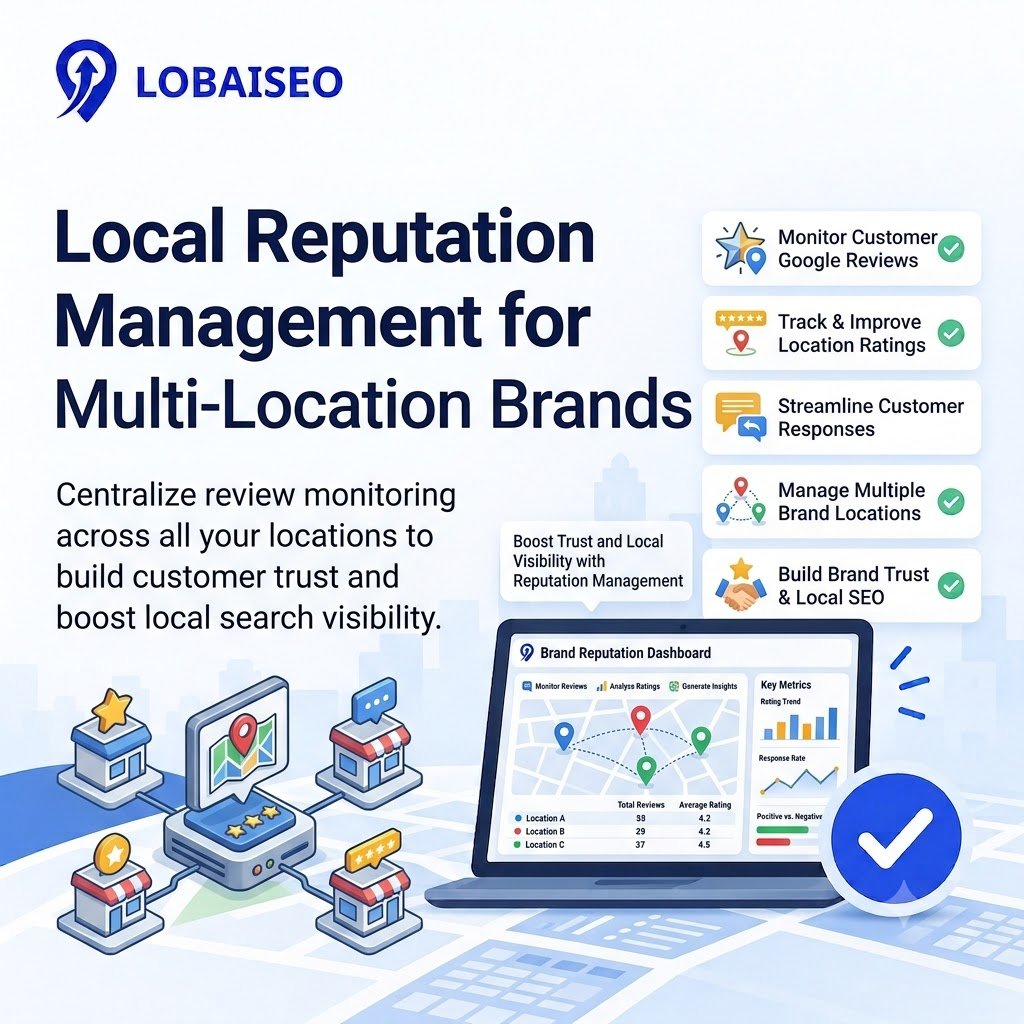
Consider a hotel chain that owns 50 hotels. If one hotel is receiving frequent complaints about cleanliness, the central staff has to see the trend and deal with that property’s manager. Same with dealer networks and local service firms. Start by giving each site a review owner, setting response dates, and confirming business names, locations, phone numbers, and operating hours. Track ratings and repeat complaints on a central dashboard. Our Google Business Profile management resources also cover practical local search challenges that businesses face.
How Do Reviews And Ratings Influence Local Customer Decisions?
Before booking, customers evaluate ratings, current reviews, and replies from the company for a local hotel, store, or service provider. Positive comments may inspire confidence while unanswered complaints may generate concern. Reviews also impact visibility in local search. Google says review count and favorable ratings, coupled with relevance and distance, are variables that can help local results.
For example, a customer comparing two resorts may feel more confident choosing the one that responds thoughtfully to guest concerns. To improve trust, track rating changes, investigate repeated complaints, and write a useful Google review response for each genuine concern. Follow Google’s official local ranking guidance when reviewing your local SEO efforts. We at Lobaiseo recommend measuring review response time, rating trends, and recurring issues across all locations rather than judging performance by star ratings alone.
Read about how can you get more Google reviews: https://blog.lobaiseo.com/how-to-get-more-google-reviews-for-your-business/
FAQs
Local reputation management means monitoring customer reviews, managing ratings, reacting to comments, and keeping your company information correct on local search engines. It helps firms create client confidence and maintain a consistent reputation across locations.
How Do You Manage a Local Business Reputation?
Check reviews often and reply swiftly to clients. Correct incorrect company details. Investigate repeat concerns. For multi-location brands, establish defined duties for local teams and measure success via a central reporting system.
Do Google Reviews Affect Local SEO?
Yeah. Google says review count and good ratings can help local search results. But the rankings are also a function of relevancy and distance. Reviews don’t guarantee greater exposure. See Google’s local ranking guidance.
How Can Negative Reviews Be Handled?
Acknowledge the customer’s complaint, answer calmly and give a reasonable solution. Verify facts before responding. Safeguard personal information. Look into repeated concerns. Report reviews only when they’re against Google’s regulations, not just because they’re nasty.
Can Reputation Management Be Automated?
Yes. Tools can help with review monitoring, notifications, reporting and automated google review replies. But sensitive issues still require human attention. If possible, please evaluate before submitting automated reviews. Follow Google’s rules for real customer reviews.